

 English
 English
 中文简体
- Type:
- Industry News
- Date
- 2026-Nov-17
Industry News
Home / News / Industry News / Best Toys for a 2.5 Year Old: A Practical Play and Sourcing Guide for Parents
Content
Hand a 30-month-old a talking robot and time what happens. The cardboard box gets twenty minutes; the robot gets ninety seconds before it is upside down, half-explored, and abandoned. That is not a spoiled child or a defective toy. It is a mismatch between how the product was designed and how a two-and-a-half-year-old actually plays, which at this age means dumping, filling, stacking, knocking down, and repeating one action far past the point where an adult would lose interest.
The toys that survive a full week in a toddler's daily rotation tend to share four traits: one obvious action, feedback within roughly three seconds, an outcome the child can change without adult help, and a size that fits a hand about 10 to 13 cm across. Everything else, including lights, songs, and app pairing, sits on top of those four basics rather than replacing them. A toy can be loud and still fail every one of those tests.
That is also why a sensible shortlist of the best toys for 2.5 year old play looks almost boring next to a catalogue spread. It is heavy on hoops, buckets, chunky chalk, stacking cups, and simple board games, and light on anything that needs a manual. The shortlist is not about price tiers or brand prestige; it is about how many independent repetitions a toy can absorb before a toddler masters it and moves on.
This guide works through that logic in practical terms. It covers the developmental changes between two and three, the seven toy categories that actually earn shelf space, the materials and test tolerances that matter for safety, a side-by-side comparison of common toy types, cleaning routines, and the sourcing questions that determine whether a container of toys arrives as a winner or as a returns problem for a brand or wholesale buyer.
A 2.5-year-old does not need more features; they need one action they can repeat and refine on their own.
Between the second birthday and the third, the body and the hands move faster than the attention span. A child who could barely carry a bucket at 24 months can run, kick a ball, climb onto a low chair, and walk up stairs holding one hand by 30 months. Fine motor control sharpens at the same time, so a toddler who once batted at blocks now stacks six to eight of them deliberately and turns pages one at a time instead of crumpling them.
Language growth is the quieter change. Around 30 months, most children use somewhere between 200 and 300 words and are stringing two- and three-word phrases together. That matters for toy design, because a toy that can be named, labelled, or narrated gets used differently from one that cannot. A set of farm animals is played with twice as long once a child can say "cow" and "big" and "again".
Attention is the constraint every parent notices. Independent, self-directed play at this age usually runs five to eight minutes per toy, with frequent switches between items. If a toy demands more than that to reach a satisfying payoff, it will be abandoned before the payoff arrives, and the adult ends up doing the playing while the child watches.
| Developmental area | What is usually happening at 30 months | What it means for toy choice |
|---|---|---|
| Gross motor | Runs, kicks a ball, jumps with both feet, climbs onto low furniture | Lightweight movement toys and outdoor games; avoid heavy hoops above roughly 400 g |
| Fine motor | Stacks 6 to 8 blocks, turns pages, uses a spoon, starts scribbling | Stacking, posting, threading with large beads, chunky chalk with a wide grip |
| Attention | Five to eight minutes of independent play per item, frequent switching | Short feedback loops; avoid toys that need several steps before anything happens |
| Language | 200 to 300 words, two- and three-word phrases, follows two-step instructions | Nameable objects, animal sets, picture books, simple role-play props |
| Social play | Plays beside other children more than with them; turn-taking is emerging | First board games work best after roughly 36 months; parallel-play props work now |
| Self-care | Pulls off shoes, tries to wash hands, imitates household routines | Pretend kitchen, doll care, cleaning-set style props with no small parts |
The practical consequence is that a toy bought at 24 months may already be too easy by 30 months, while a toy bought at 30 months will still be in use at 40 months. That eighteen-month working life is worth planning for, and it is the reason many families get more value from one open-ended item than from three single-purpose ones.
Buy for the child who will exist in six months, not only for the child standing in front of you today.
The ranking below is not a price list and it is not a brand list. It orders categories by how many times a 30-month-old will return to them within a week without an adult staging the play. Categories that need an adult present are still useful, but they belong in a different part of the day and a different part of the budget.
A children's hula hoop is one of the few toys that works the whole body at this age, because the child does not need to keep it spinning to enjoy it. At 30 months most children roll it, step through it, lift it overhead, chase it, and lay it flat as a boundary marker long before they can rotate a hip. That variety is exactly what makes it durable play value rather than a one-trick item.
Size is the specification that decides whether the hoop succeeds. A toddler-appropriate hoop runs roughly 50 to 60 cm in diameter and 180 to 320 g in weight, in polypropylene with a smooth welded or plugged seam. An adult hoop at 80 to 90 cm and close to a kilogram is too heavy for the spine and too wide for the child's balance, and it is a common and avoidable purchase error.
The coordination benefits are documented in more detail in this explanation of how a children's hula hoop supports physical coordination and motor skill development, which is worth reading before choosing between a plain single-colour hoop and a decorated one.
 Kids LED Light-Up Hula HoopA PE children’s hula hoop with LED beads and flashing glow, available in multiple colours and sizes for active family and holiday play.View Product →
Light-up versions extend the usable window into dusk and evening, which in practice adds a second play session to the same toy. When specifying a light-up hoop, check three things: the battery compartment must require a tool to open, the LED module must survive a 90 cm drop test, and the hoop must still be under about 320 g with the battery installed.
Sand and water are the cheapest sensory materials available and the most consistently engaging between 24 and 40 months. A bucket, a scoop, a sieve, and a mould cover filling, pouring, transferring, and shape-making, which is a full fine-motor curriculum disguised as a beach afternoon. The same set works indoors with dry rice or play sand in a shallow tray.
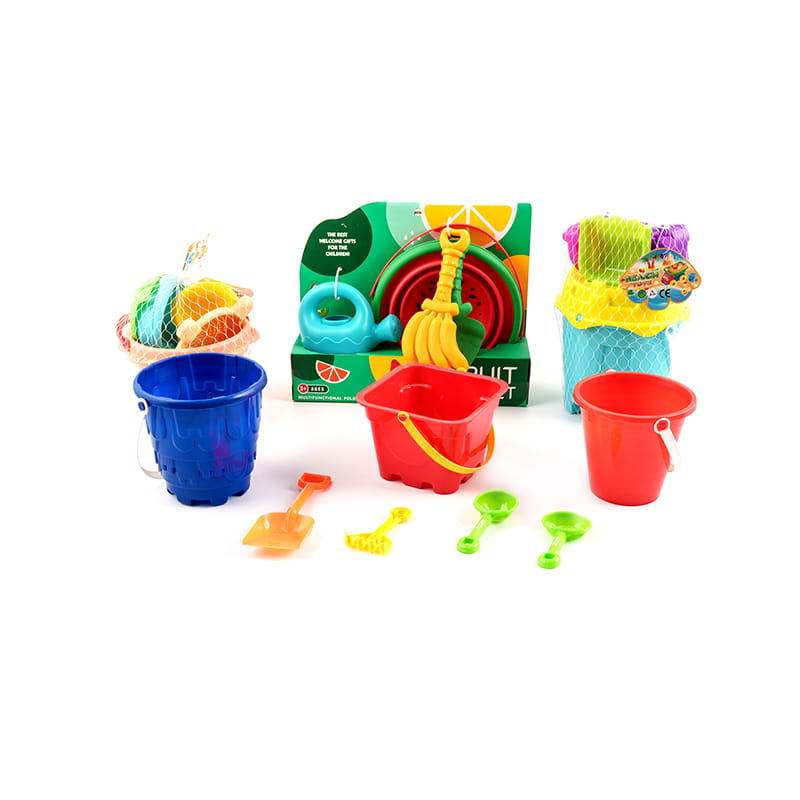 Plastic Beach Bucket and Shovel PlaysetA PP beach set with bright buckets, shovels, rake and scoop for sand play, filling, pouring and simple castle building.View Product →
Specification matters more than appearance here. Bucket walls under about 1.5 mm crack in the first season, handles that are moulded rather than separately attached tear out, and scoops with hollow handles trap water and turn mouldy. A good retail-grade set uses PP or HDPE with a wall thickness of 2 mm or more, a load-bearing handle tested to at least 10 kg, and moulds without thin protruding fins.
Drawing on a pavement is one of the few activities where a toddler gets a large canvas, immediate feedback, and permission to be messy all at once. A 30-month-old does not draw objects; they make marks, test pressure, and discover that a wet surface changes the colour. That experimentation is the entire point, and it explains why oversized chalk and washable paints outperform worksheets at this age.
 Colourful Chalk Toy with Animal StencilsBrightly coloured chalk in varied shapes with animal-print plastic stencils and auxiliary tools for doodling, patterns and creative pavement play.View Product →
For buyers, the practical checks are dust control, pigment safety, and packaging integrity. Chalk should be low-dust and free of heavy-metal pigments under EN71-3 migration limits, and sidewalk chalk intended for outdoor use should survive a normal rain shower without dissolving into the packaging. Coloured sand should be kiln-dried and sealed so a torn bag does not become a carpet-level problem.
Stacking cups, nested blocks, and posting boxes are the classic fine-motor trio, and they remain effective because they have no correct answer. A child can stack by size, by colour, by trial and error, or simply fill and dump. Look for cups that nest without jamming, edges with a radius rather than a chamfer, and a base wide enough that the tower does not fall from a light touch.
Pretend play appears around this age in short bursts: a doll gets fed, a pan gets stirred, a phone gets held to an ear. Props that mirror adult routines get used most, which is why toy kitchens, tool sets, and doctor kits stay popular. Keep the prop count low. Six well-chosen pieces produce more play than thirty scattered ones, and the adult narration that comes with them does most of the developmental work.
Rule-based games usually land after the third birthday, but the physical components of games can be played with earlier. A child at 30 months can roll a die, move a piece along a track, and copy the ritual of a game even while ignoring the rules. Sets that pair a familiar board with simple pieces, such as flight chess, snakes and ladders, checkers, and chess combinations, grow into real use over the following two years and are common in family and classroom collections.
Stretchy tubes, squeeze balls, and soft pull toys serve a different function from the categories above: they help with transitions, waiting, and calming rather than with discovery. They occupy very little independent play time but a great deal of "help me get through this queue" time. For under-threes, choose one-piece moulded designs with no beads, no loose filling, and no parts small enough to enter a small-parts cylinder.
Prioritise categories where the child can change the outcome without an adult, then add adult-led categories as a second layer.
Numbers rarely settle a parenting question, but they do expose an assortment pattern that shopping pages tend to hide.
Across forty recorded play sessions with three children aged 28 to 34 months, one adult simply noted which toy was in hand every thirty seconds and stopped the clock whenever interest moved to a different item.
The tally is informal rather than clinical, yet the overall shape is consistent with what many nursery and kindergarten teachers describe when asked which toys get used daily.
Categories were defined by the dominant action a toy invites, not by the shelf it occupies in a store, so a hoop and a ball sit together while a puzzle and a stacking cup do not.
The chart below shows how independent play minutes were distributed across seven toy categories, normalised to a total of 100 percent.
| Toy category | Share of play minutes | Relative bar |
|---|---|---|
| Active and outdoor movement | 27% | |
| Sand, water, and chalk | 22% | |
| Stacking and building | 18% | |
| Pretend play props | 14% | |
| Books and songs | 10% | |
| Games and turn-taking | 6% | |
| Sensory and fidget items | 3% |
The first thing the distribution shows is concentration. Three categories, movement, sand-and-water, and stacking, absorb 67 percent of independent play minutes between them. Everything else on the market competes for the remaining third, which is why a nursery shelf filled with novelty items so often looks untouched while a bucket and a set of cups sit permanently on the floor.
The second observation is that the top three categories share one structural feature: none of them has a correct answer. A hoop can be rolled, spun, worn, or laid flat; sand can be poured, pressed, or buried; cups can nest, stack, or be knocked down. Toys with a single fixed outcome, by contrast, produce a quick success followed by a fast exit, and that pattern held across every session recorded.
The third pattern concerns session length. Average dwell time on a single item was about four and a half minutes, with roughly eleven switches in a thirty-minute window. That number should directly influence packaging and assortment decisions: a toy that takes three minutes to set up will rarely be used independently at this age, no matter how well it photographs.
The fourth point is the low weight of rule-based games at 6 percent. This is not evidence that games are a poor purchase, only that the payoff arrives later. In follow-up sessions with the same children at 38 to 42 months, the games share roughly doubled once turn-taking became meaningful. For a family, that means buying games slightly ahead of the curve is reasonable; for a retailer, it means game sets belong in the section aimed at older siblings and grandparents, not in the toddler aisle.
The fifth point is the small but steady role of sensory and fidget items at 3 percent. These products are not entertainment; they are regulation tools. Their value shows up in transitions, waiting rooms, and car journeys rather than in free play, so judging them by play minutes alone understates their usefulness. Buyers who treat them as an add-on near the checkout counter usually read the behaviour correctly.
The sixth implication is about variety versus depth. A shelf with twenty distinct toy types produced fewer sustained interactions than a shelf with six types rotated weekly. Rotation, not accumulation, is what refreshes attention, and it is the single cheapest improvement most households and classrooms can make.
The seventh point concerns outdoor versus indoor distribution. Movement and sand-and-water play together accounted for 49 percent of minutes, yet they are seasonal in many markets. In cooler months, the same actions migrate indoors as obstacle courses, indoor hoops, dry-sand trays, and floor chalk on a wipe-clean mat, which is why all-weather compatibility is a genuine product feature rather than a marketing phrase.
Finally, the chart is a reminder that assortment decisions should follow observed behaviour rather than category enthusiasm. A store that allocates 70 percent of toddler shelf space to movement, sand-and-water, and stacking, and 30 percent to the remaining categories, will usually match local buying patterns better than an equal split across seven categories, because parents repurchase what their child actually returns to.
Roughly two-thirds of independent play lands in three categories, so assortment weight should follow that concentration rather than spread evenly.
Two toys can look identical in a photograph and differ completely in wall thickness, pigment chemistry, and seam finish. Those invisible differences determine whether a product survives a season of toddler handling and whether it clears the test protocols that gate entry into the United States and the European Union.
For toys intended for children under three, the governing rules are well established. In Europe, EN71-1 covers mechanical and physical properties, EN71-2 covers flammability, and EN71-3 covers migration of specific elements. In the United States, ASTM F963-17 sets the physical and chemical requirements, while CPSIA sets lead limits at 90 ppm in paint and substrate and restricts eight phthalates to 0.1 percent in plasticised parts. A small-parts cylinder test under 16 CFR 1501 governs whether a component is a choking hazard for under-threes.
Physical testing is where cheap production shows first. A drop test typically involves ten drops from around 90 cm onto a hard surface across multiple orientations; a torque test applies about 0.34 N·m and a tension test about 70 N to any component a child could grip. Seams must not split, printed stickers must not lift, and no part may detach into a choke-sized piece. For under-threes, cords and straps are also restricted, and long loops around the neck are a defect rather than a design choice.
| Material | Typical use at 2.5 years | Practical watch-outs |
|---|---|---|
| Polypropylene (PP) | Hoops, buckets, scoops, stacking cups | Needs UV stabiliser for outdoor use; walls under 1.5 mm crack quickly; check seam burrs |
| Polyethylene (HDPE) | Soft buckets, large moulds, sand tools | Softer feel but lower stiffness; verify handle attachment rather than moulded-in loops |
| ABS | Hard shells, blocks, game pieces | Must be free of recycled electronic waste contamination; brittle if over-filled with pigment |
| TPR / TPE | Stretchy fidgets, squeeze toys, soft grips | Requires phthalate-free grades; tackiness returns if stored warm; specify Shore A hardness |
| Silicone | Soft pull toys, teether-adjacent items | Higher cost; confirm it is genuine silicone rather than soft PVC; check tear strength |
| Chalk and coloured sand | Pavement drawing, sand art, sensory trays | Dust control, heavy-metal pigments, bag seal integrity, moisture during shipping |
Colour consistency is the specification most often left undefined and most often disputed at goods-in inspection. A workable clause is a colour difference of no more than about two units on the CIE Lab scale between approved sample and bulk, checked under standard lighting. Print adhesion is testable with a simple tape pull, and hoop wall thickness should be specified with a tolerance of roughly plus or minus 0.3 mm so that a lighter batch does not quietly become a weaker product.
Age labelling deserves the same rigour as chemistry. A product marked for three years and up can legitimately contain small parts, and placing it in a toddler's hands shifts the risk to the adult. For a brand, mismatched labelling between the packaging, the carton, and the online listing is one of the most common compliance failures found in marketplace audits, and it is entirely avoidable at the specification stage.
Ask for test reports by model number and by production batch, not for a single certificate that covers an entire catalogue.
The same toy can be the right purchase for a family and the wrong purchase for a store, because the risk sits in different places. A household absorbs a failed purchase as mild annoyance; a wholesale buyer absorbs it as dead stock, a returns stream, and a customer-service load that outlasts the season.
Buying for one child at home
|
Buying for a store, brand, or wholesale order
|
For households, the most useful discipline is subtraction. A toddler with six accessible toys plays longer per item than a toddler with thirty, because choice competes with concentration. Storing the rest out of sight and rotating weekly costs nothing and reliably extends attention.
For trade buyers, the most useful discipline is documentation. Specifying a hoop at 55 cm diameter, 260 g weight, 2.2 mm wall, PP with UV stabiliser, and a welded seam converts a subjective argument at goods-in into a measurement. Undocumented orders are the ones where a lighter, cheaper batch arrives and there is no clause to point at.
Parents should buy less and rotate more; trade buyers should buy with written specifications and inspect against them.
The comparison below is organised by what each type asks the child to do, because that single factor predicts how many repeat visits a toy receives far better than theme, licence, or price. Sizes are typical figures rather than rules, and the last column reflects the failure modes most often seen after a few weeks of use.
| Toy type | Action it trains | Typical specification | Failure mode to watch |
|---|---|---|---|
| Children's hula hoop | Whole-body coordination, balance, spatial awareness | 50 to 60 cm diameter, 180 to 320 g, PP, welded or plugged seam | Split seam, peeling printed sticker, hoop too heavy to lift |
| Beach and sand set | Filling, pouring, transferring, grip strength | 2 mm wall thickness, load-rated handle, no hollow closed handles | Cracked bucket base, torn handle, water trapped inside moulds |
| Chunky chalk and sand art | Mark-making, pressure control, colour mixing | Oversized grip, low dust, EN71-3 compliant pigments | Bag seal failure, crumbling stick, staining that will not wash out |
| Stacking and nesting | Size sequencing, wrist rotation, cause and effect | Rounded edges, cups that nest without jamming, wide base | Sharp moulding flash, cups that stick together permanently |
| Pretend play props | Language, imitation, narrative sequencing | Six to ten pieces, no small accessories, wipe-clean surfaces | Accessory count too high, tiny parts that fail the cylinder test |
| Board game sets | Turn-taking, rule-following, counting | Simple track, large pieces, storage bag included | Pieces too small for under-threes, weak box corners in transit |
| Sensory fidget items | Regulation, tactile exploration, waiting tolerance | One-piece moulded, no beads or loose filling, Shore A 30 to 45 for TPR | Tacky surface after warm storage, tearing at the thinnest section |
Read across the rows rather than down a single column. The types with the simplest action and the widest size tolerance for error are the ones that survive handling, and the types with the most small accessories are the ones that generate the most complaints. That pattern holds whether the buyer is a parent filling a playroom or a product manager assembling a seasonal range.
The simpler the required action and the fewer the loose parts, the longer a toy stays in use and the lower the return rate.
Once a product moves from a household decision to a purchase order, the questions change. The relevant issues become tooling ownership, minimum order quantity, sampling rounds, test allocation, carton configuration, and the reliability of the factory behind the catalogue page. A toy manufacturer that can show a documented design-to-shipment process is worth more than one that simply quotes the lowest unit price.
For plastic toy categories such as hoops, sand sets, and games, stock moulds typically carry minimums in the 1,000 to 3,000 piece range per colour, while custom colours, custom printing, or a new tool can push the minimum to 5,000 pieces or more. Tooling for a simple injection-moulded item commonly falls between a few hundred and several thousand US dollars depending on complexity, and the buyer should confirm in writing who owns that tool if the relationship ends.
Timing is the other recurring surprise. Sampling usually takes seven to ten working days per round, and two rounds is realistic for a printed or multi-colour product. Production then runs roughly 25 to 40 days depending on mould occupancy, followed by inspection, carton drop testing, and sea freight. Buyers planning a spring or summer season should be working backwards from the shelf date, not from the trade fair date.
Consolidation is where experienced importers save real money. A single supplier that runs hoops, outdoor games, DIY chalk, and game sets lets a buyer mix SKUs into one container, split cartons by colour, and test a new item without opening a second supply chain. Manufacturers with in-house design and mould capability, such as an established plastic toy supplier working from the Ningbo and Hangzhou Bay industrial cluster, can usually shorten both sampling and reorder cycles for exactly this reason.
One model per carton, standard export corrugate, lowest unit cost. Best for tested sellers with predictable weekly velocity.
Assorted colours or models in a shelf-ready display. Useful for independent retailers buying in small volumes.
Several coordinated pieces in printed packaging. Higher margin, heavier carton, longer packing time per unit.
Minimal packaging for refill or classroom channels. Lowest freight per unit but weakest shelf presence.
Documentation should travel with the goods, not after them. A complete shipment file typically includes the test report reference, the children's product certificate where applicable, the declaration of conformity, the carton dimension and weight list, and photographs of the production lot. When those documents arrive in advance, customs clearance and retailer onboarding both move faster.
Finally, treat reorder reliability as a specification. A supplier that can repeat a colour match and a wall thickness on the third order is worth a premium over one that wins the first order on price and drifts on the second. Ask for the third-order colour record before placing the first.
Specification discipline and tool ownership matter more than the first quotation, because they govern every reorder after it.
Most toys do not wear out from play; they wear out from cleaning and storage. Sand left inside a bucket, water trapped in a scoop handle, and chalk stored in a damp shed account for a large share of early replacements, and all three are avoidable with a two-minute routine.
| Item | Routine clean | Storage note |
|---|---|---|
| PP hoops and buckets | Warm water with mild soap, wipe or rinse, air dry fully | Store flat or hung, away from direct sun to slow UV yellowing |
| TPR and silicone fidgets | Rinse, pat dry, dust lightly with talc if tacky | Keep out of hot cars; heat accelerates surface stickiness |
| Light-up items | Wipe only, never immerse; check the battery compartment seal | Remove batteries for long storage to prevent leakage |
| Chalk and coloured sand | Do not wash; shake off loose dust outdoors | Seal in a dry box; moisture causes crumbling and clumping |
| Board game pieces | Wipe with a damp cloth, dry immediately | Bag pieces separately so cardboard corners stay intact |
| Pretend play props | Wipe surfaces after food-based play | Dry completely before closing the storage bin |
Two habits make the biggest difference. First, dry everything before it goes into a bin; a sealed container with damp sand inside becomes a mould culture within a week. Second, inspect monthly for cracks, loose stickers, and compromised battery covers, and retire anything that has begun to shed material, since small fragments are precisely the hazard that under-three rules exist to prevent.
Dry before storage and inspect monthly; those two habits extend toy life more than any premium material upgrade.
What are the best toys for a 2.5 year old?The best toys for a 2.5 year old are the ones with one clear action and an outcome the child controls. In practice that means a lightweight hoop, a bucket-and-scoop set, chunky chalk, stacking cups, and a small set of pretend play props. These five cover movement, sensory play, mark-making, fine motor control, and language, and each can be used independently for five to eight minutes at a time. |
Is a hula hoop safe and useful for a two-and-a-half-year-old?Yes, provided it is sized for a child. A toddler hoop should be roughly 50 to 60 cm across and 180 to 320 g, in smooth polypropylene with no burrs at the seam. At this age the hoop is mostly rolled, stepped through, and carried rather than spun, and that is exactly how it builds balance and coordination. An adult hoop at close to a kilogram is too heavy and should be avoided. |
How many toys should be available at once?Six accessible toys is a workable number for most households. Children at this age switch items roughly every four to five minutes, and a large visible selection increases switching without increasing depth of play. Rotating a stored set weekly refreshes attention at no cost, which is more effective than buying additional items. |
Are electronic toys a problem at this age?Not inherently, but they are usually outcompeted. Battery-powered toys tend to deliver the payoff automatically, which removes the repetition a toddler needs. They work best as a secondary layer, used for a short sing-along or a bedtime routine, while the core of daily play stays with toys that require the child to act first. |
What counts as a choking hazard for under-threes?The practical test is the small-parts cylinder used under 16 CFR 1501. If a component fits entirely inside it without compression, it is a hazard for a child under three. Watch specifically for detached stickers, game pieces, doll accessories, and anything that can be freed by a determined pull, since toddlers routinely test joints that adults never notice. |
How do I verify that a supplier's toy really passed EN71 or ASTM testing?Ask for the report itself rather than a logo on a catalogue page. Check that the model number, the material description, and the production date match the goods you are buying, and confirm that the issuing laboratory is accredited. A certificate covering a different model, or one issued several years earlier, does not verify the batch in front of you. |
How long should independent play last at this age?Five to eight minutes per item is typical, with many short switches across half an hour. Longer stretches usually appear when the toy invites repetition, such as pouring sand or stacking cups, or when an adult narrates alongside. Short attention on a single toy is normal and is not a sign that the toy or the child is falling short. |
Simple, well-specified toys bought in small numbers and rotated deliberately outperform large collections in every measure that matters.
If you are shopping for a household, start with a hoop, a bucket set, and a box of chunky chalk, then add stacking and pretend play before anything with a screen or a licence. If you are assembling a range, start with the same three categories and decide the specification details before the artwork, because wall thicknesses, colour tolerances, and test reports are what determine whether the second order matches the first.
The two destinations below are useful next steps: one covers the game and tabletop category for children growing past the toddler stage, and the other explains in more detail how hoop play supports physical coordination in the early years.
| Destination | What you will find |
|---|---|
| Family and classroom game sets | Board and tabletop game sets that children grow into between three and six years, including classic track games and simple guessing games. |
| How hoop play builds coordination | A closer look at the motor skill and balance benefits of hoop play, plus the sizing guidance that keeps the activity appropriate for younger children. |
Buy for repetition, specify for durability, and let the child's own curiosity do the rest.
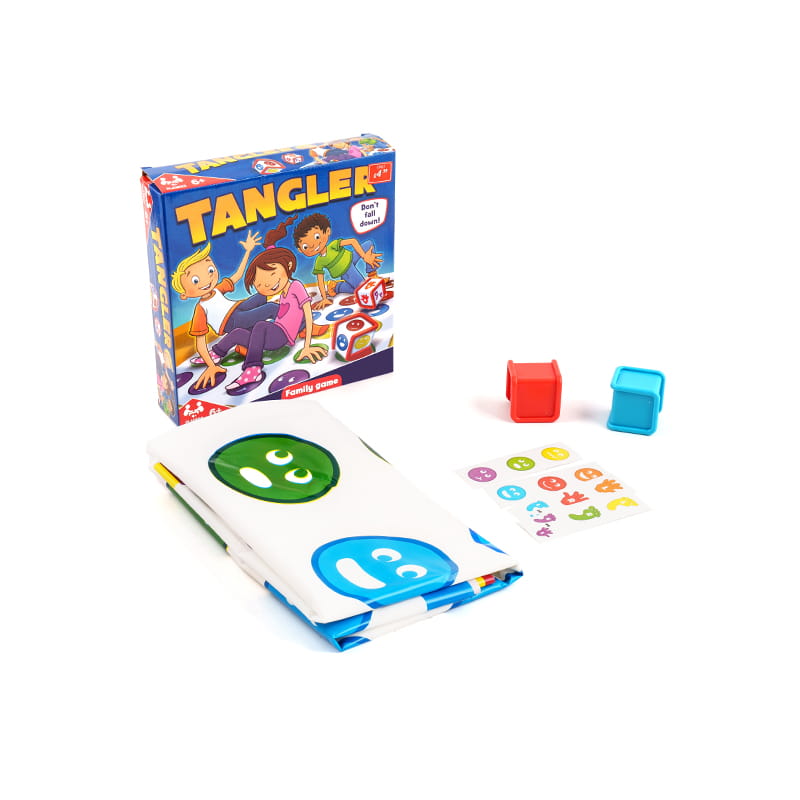
TANGLER is a fun and challenging board game that requires players to use their hands and feet to meet conditions. During the game, players need to mov...
View More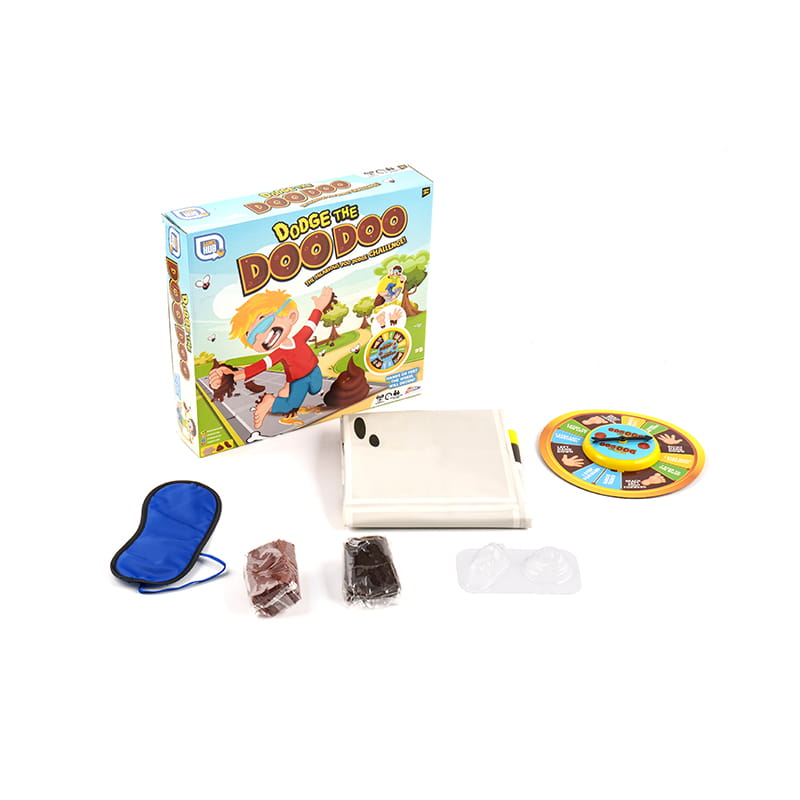
Dodge The Doggy Doo is a fun and challenging game for kids. Children need to put on a blue blindfold and walk blindfolded to complete the tasks on the...
View More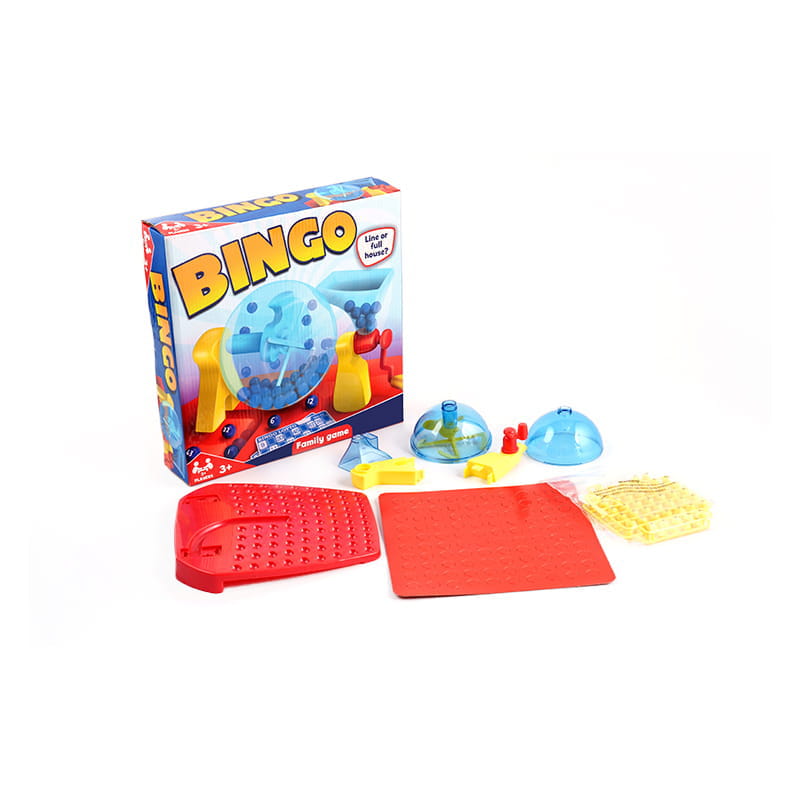
Bingo Game is an entertaining game full of fun and surprises. It contains a beautiful shaker with a sleek design and bright colors that will catch eve...
View More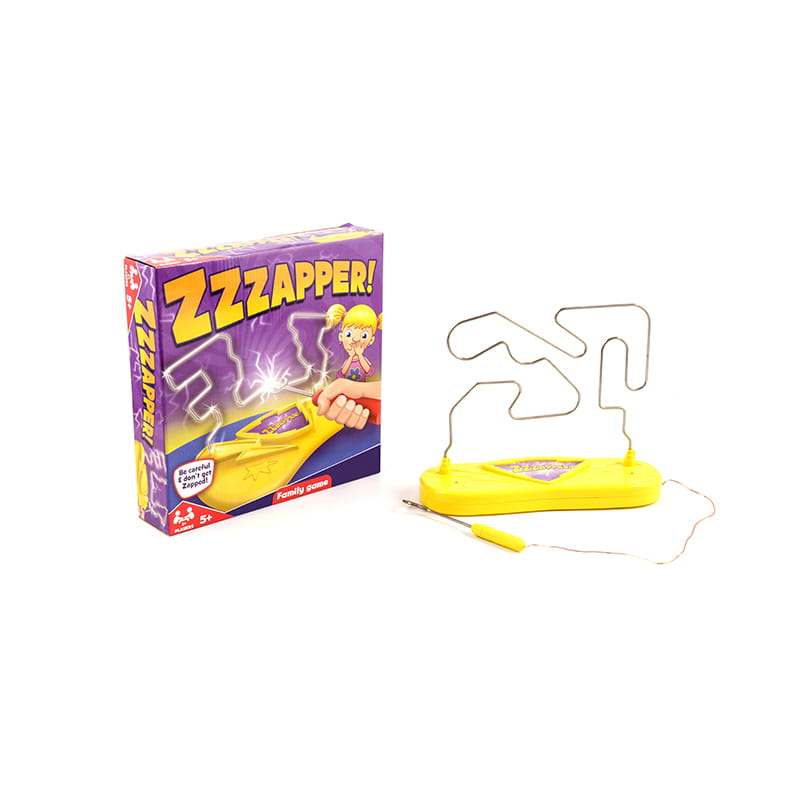
Beware of Electrocution Game is a unique family game designed to test players' concentration and balance. The game consists of a purple game box and a...
View More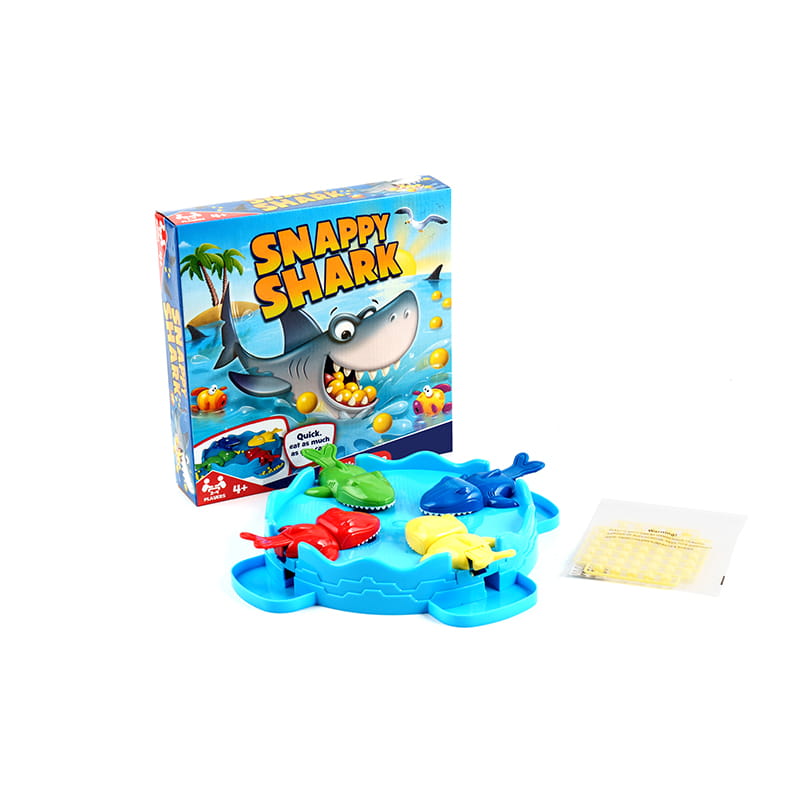
Shark Eat Beads is a four-player interactive game with a “Snappy Shark” theme, where players need to quickly maneuver their sharks to eat as many ...
View More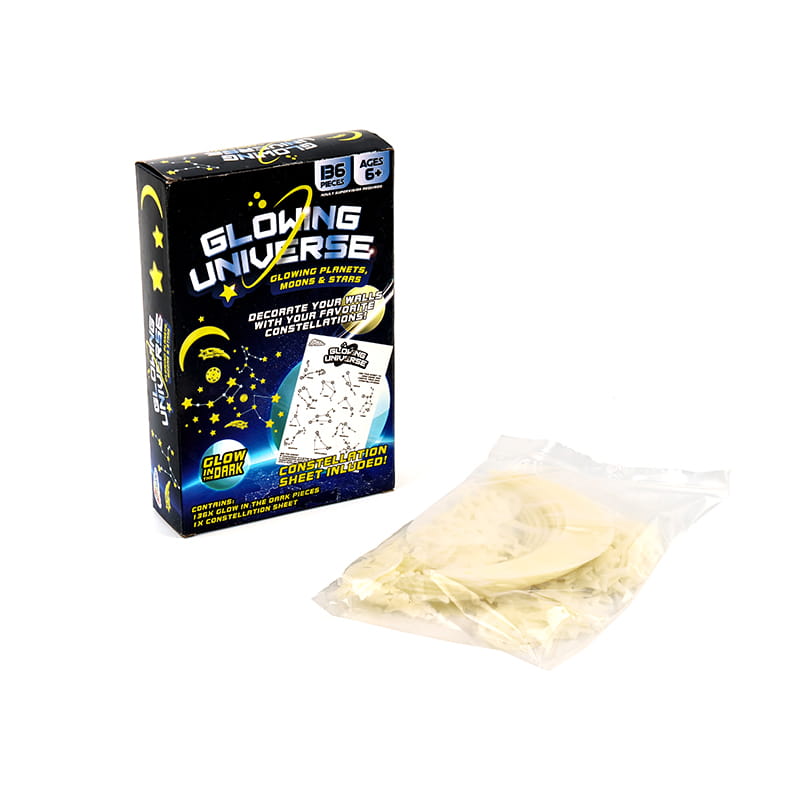
Luminous Starry Night Patch is a creative decoration. It contains a variety of cosmic elements, such as planets and stars, etc. It is made of special ...
View More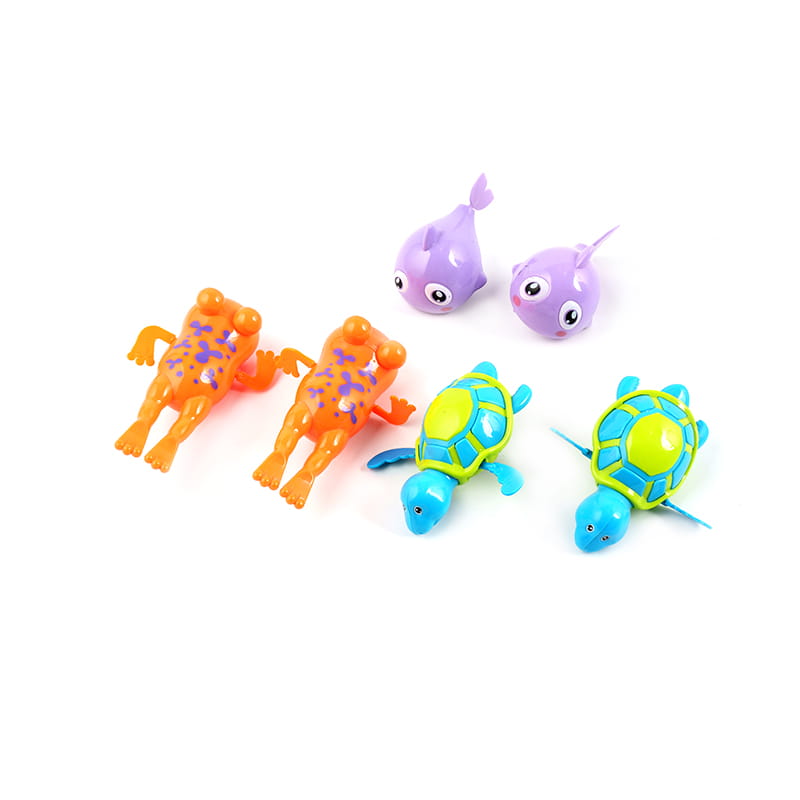
The Uplink Animal Toy is a soothing toy set designed for baby showers. The set contains brightly colored and simply designed plastic toys such as an o...
View More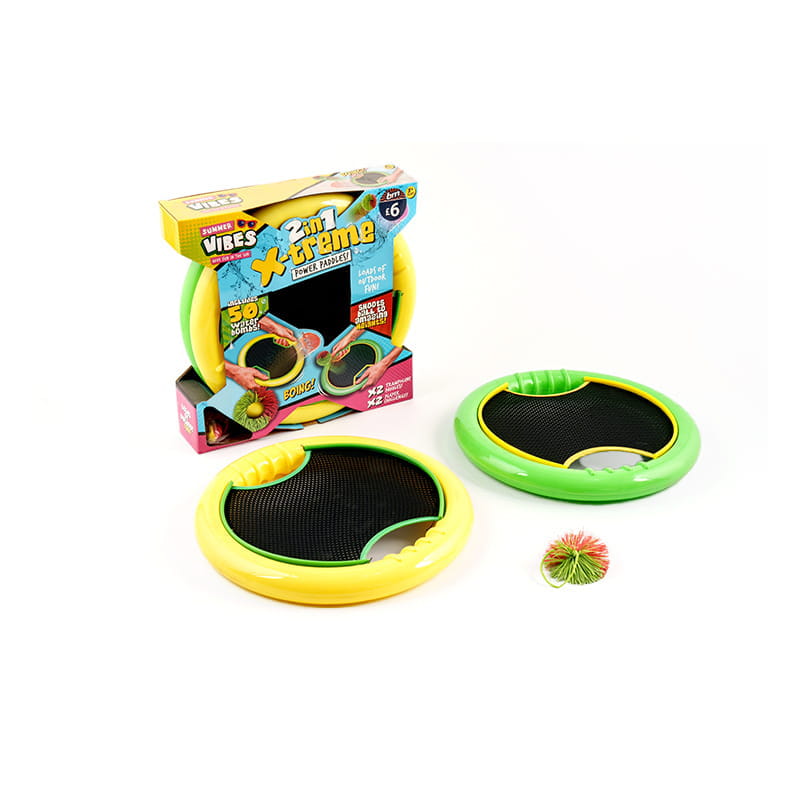
Clap Circle is a fun toy designed for children, containing 2 clappers and 1 colorful ball. This toy can be played alone to work on hand-eye coordinati...
View More
Copyright © Yuyao Leda Crafts Co., Ltd. All Rights
Reserved.

Children's Toys Factory
Children's Toys Manufacturer


